Archive Record
Xenoanthropology Log
Lieutenant Commander Naomi Voss, Senior Xenoanthropologist.
Senior Xenoanthropologist’s Log, Stardate 79092.237.
I reported aboard USS Kepler today.
The assignment concludes nearly eighteen months embedded among a pre-warp civilization on the third inhabited world of the Gamma Corvi system.
Officially, the mission was an anthropological field study conducted from USS Rhode Island.
Unofficially, it was a prolonged exercise in becoming uninteresting.
The objective was simple.
Live among the population.
Participate.
Observe.
Listen.
Eventually people stop performing for the researcher and return to being themselves.
That is when the useful work begins.
The experience reminded me why I entered this field.
Growing up on Luna, I was surrounded by people.
What fascinated me were the environments.
Every corridor.
Every park.
Every lake.
Every horizon.
Someone had designed it.
Someone had decided what normal should look like.
Luna was beautiful.
It was also, in many respects, a snow globe.
As a child I became curious about the worlds beyond it.
How did people live when their rivers were real rivers?
When their weather arrived uninvited?
When their cultures evolved alongside landscapes no engineer had planned?
That curiosity eventually became a profession.
Twenty-one years later, I am apparently considered senior enough to supervise other researchers.
I continue to find this mildly suspicious.
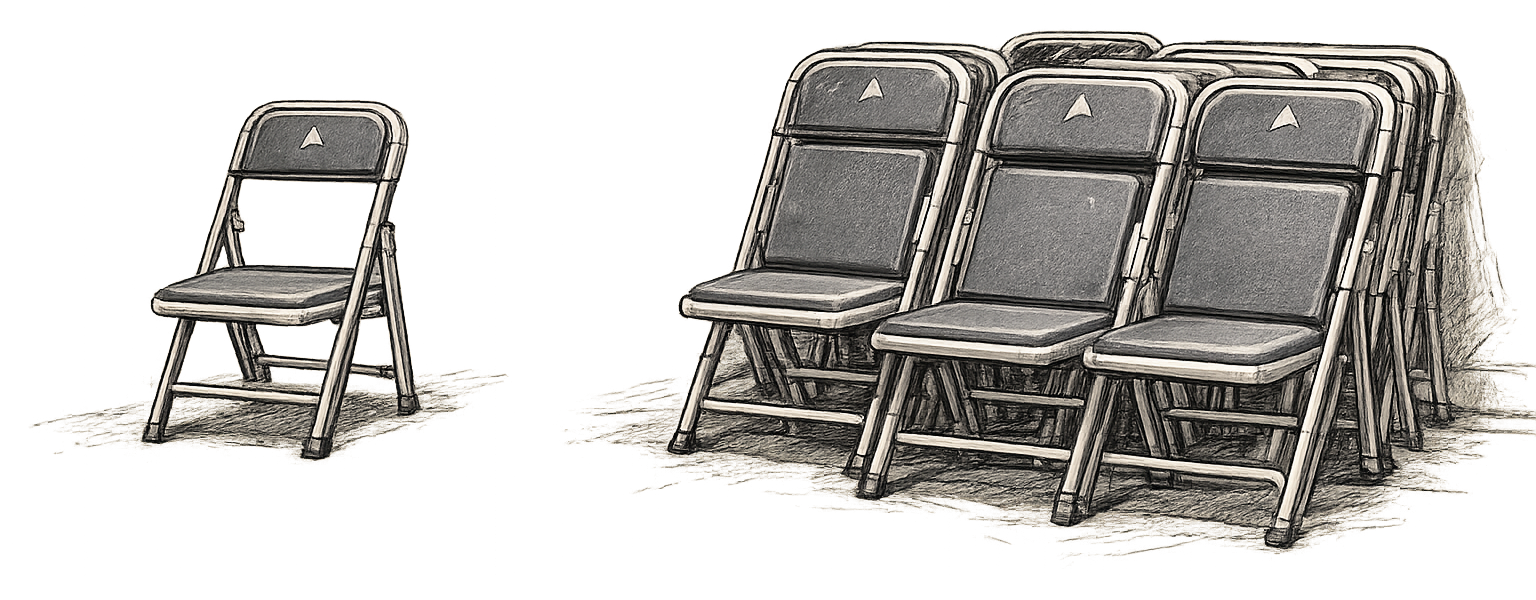
Years of fieldwork have also left me with an unfortunate habit of counting chairs whenever I enter a room.
Communities reveal themselves through the spaces they create for one another.
More importantly, they reveal themselves through the people left standing.
Fortunately, Kepler’s mission appears less concerned with hierarchy than capability.
That suits me.
There comes a point in many scientific careers when advancement requires leaving the work behind.
I discovered some time ago that I would rather remain close to the questions.
Kepler is filled with people who seem to have reached similar conclusions.
I spent part of the afternoon reviewing colony profiles, cultural assessments, and community histories associated with our planned mission areas.
What interests me most are not the settlements themselves.
It is the stories people tell about them.
The difference between a place and a home is often narrative.
Two communities can occupy identical terrain and experience it entirely differently.
One sees hardship.
The other sees belonging.
Understanding that distinction is often the first step toward helping.
I have not yet met the entire crew.
I have, however, already heard three competing descriptions of what Kepler is intended to become.
That strikes me as a healthy sign.
Communities are rarely built by people who agree on everything.
They are built by people who continue showing up anyway.
I suspect that observation will prove relevant here.
End log.