Archive Record
Flight Operations Log
Lieutenant Koren, Flight Operations Officer.
Flight Operations Log, Stardate 79072.418.
The final planetary support craft assigned to USS Kepler arrived today from Antares Fleet Yards and associated support facilities.
With their arrival, Flight Operations formally assumes responsibility for the vessel’s complete auxiliary fleet.
Many starships maintain shuttle inventories primarily for transport, logistics, and emergency operations. The composition of Kepler’s flight group reflects a different purpose. Every craft assigned to this vessel has been selected to support sustained operations among frontier communities, developing member worlds, and isolated Federation settlements.
The naming convention adopted by Captain McClendon reflects that mission.
Rather than commemorating admirals, battles, or historical figures, our support craft are named for places people call home. Settlements. Harbors. Crossings. Communities.
It is a small thing.
Flight crews understand that small things matter.
When a physician departs aboard Harmony carrying vaccines to an isolated settlement, or engineers arrive aboard Stonebridge to restore damaged infrastructure, the name on the hull becomes part of the message being delivered.
You belong.
You were remembered.
The complete auxiliary craft manifest is recorded below.
Runabouts
- Meridian
- New Athens
- Firstlight
- Horizon
- Unity
- Haven
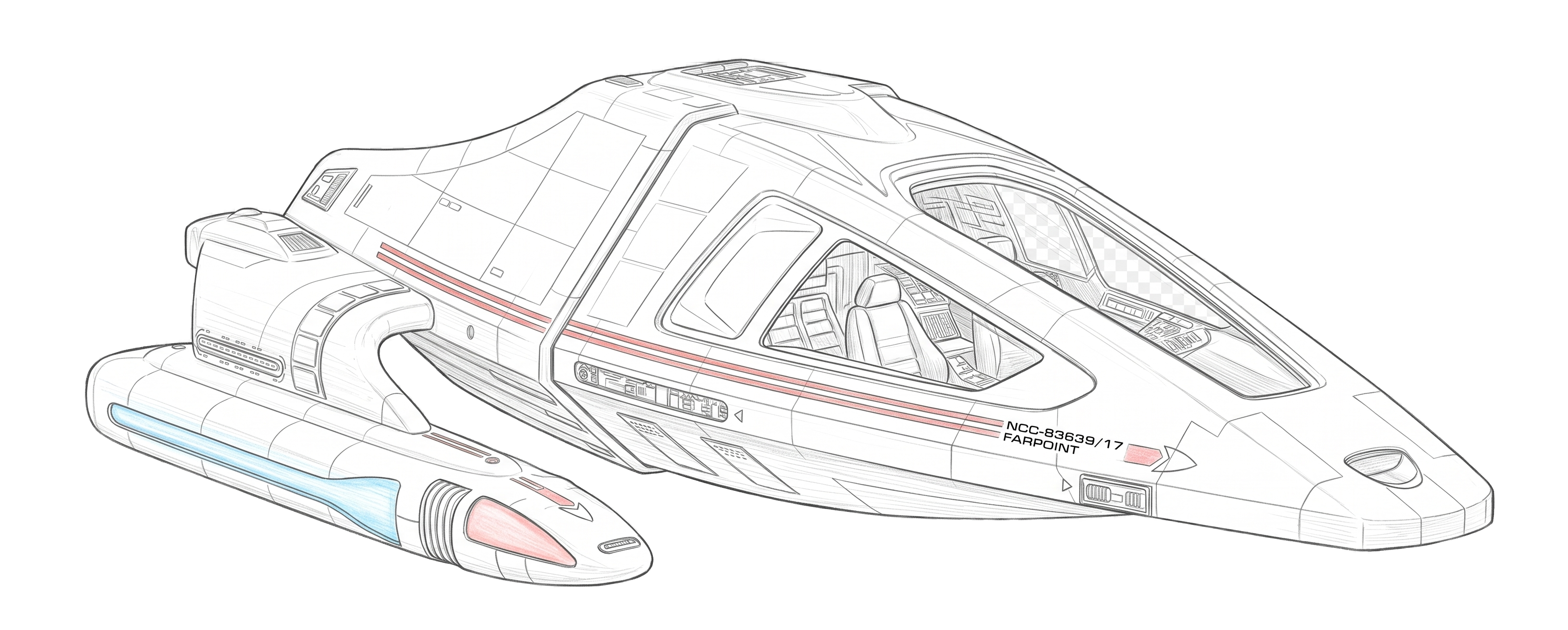
Type-9 Shuttlecraft
- Archer’s Landing
- Port Meridian
- Tycho Bay
- New Horizon
- Pioneer Point
- Liberty Crossing
- Farpoint
Type-11 Shuttlecraft
- New Geneva
- Harmony
- Prospect
- Riverbend
- Sunrise
- Northwatch
- Anchor Point
- Juniper
- Westhaven
- Stonebridge
- Highwater
- Concord
- Waystation
Flight Operations has completed intake inspections, systems certification reviews, and initial flight readiness evaluations. Docking assignments have been finalized within the Variable Mission Craft Facility and auxiliary hangar facilities.
All craft are fueled, provisioned, and available for deployment.
Flight crews have already developed predictable preferences. Junior pilots compete for assignments aboard the newer Type-11s. Veteran crews continue to request the Type-9s.
The Type-11 is unquestionably the more capable shuttlecraft.
The Type-9, however, has developed a reputation throughout the fleet for always finding a way to come home.
The final shuttle crossed the bay threshold at 1438 hours.
Flight crews applauded.
Maintenance crews immediately began arguing over hangar assignments.
This is generally considered a healthy sign.
For Flight Operations, the arrival of the final auxiliary craft feels less like a delivery and more like a promise. Every one of these vessels represents a future mission, a future landing, and a future community waiting somewhere beyond our current charts.
As early Christmas presents go, I suspect this one will be difficult to top.
End Log.